
Industrial mixing plays an important role in manufacturing processes that require consistent blending, dispersion, and fluid movement. An Impeller Agitator is a mechanical device designed to mix liquids and help maintain uniform conditions inside tanks and processing vessels. Industries use these systems to improve mixing efficiency, support production quality, and handle different process requirements.
Premix Technologies is a relevant brand for businesses exploring industrial mixing equipment and process solutions. Selecting the right agitator depends on factors such as liquid viscosity, tank dimensions, mixing objectives, and operating conditions. Understanding these requirements helps manufacturers choose equipment that supports reliable and efficient production.
What Is an Impeller Agitator?
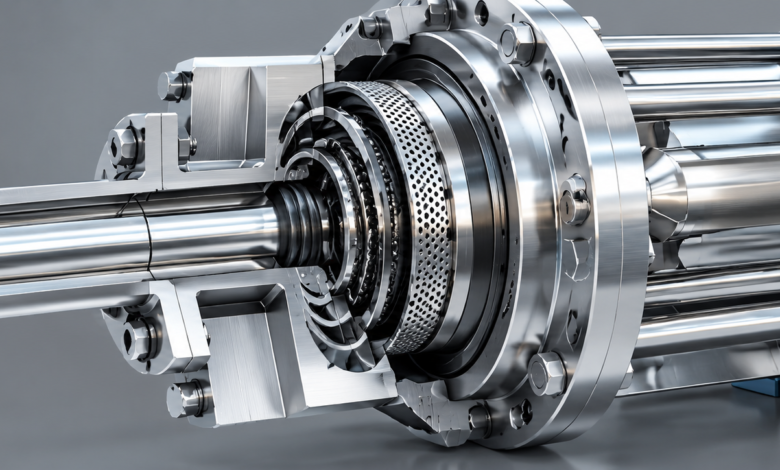
An impeller agitator is a mixing mechanism that uses rotating blades or elements to create fluid movement inside a tank or vessel. The impeller transfers mechanical energy to the liquid, generating flow patterns that help blend ingredients and distribute materials throughout the mixture.
Different impeller designs produce different types of flow. Some create axial flow, which moves liquid mainly along the direction of the shaft, while others produce radial flow, directing liquid outward from the impeller. The appropriate design depends on the process, material properties, and desired mixing results.
Types of Impeller Agitators
Different industrial processes require different impeller configurations. Selecting the correct type helps achieve the desired mixing performance while managing energy consumption.
Axial Flow Impellers: These impellers move liquid primarily parallel to the shaft. They are commonly used for blending, circulation, and applications that require movement throughout a vessel.
Radial Flow Impellers: These designs direct liquid outward from the impeller. They can be suitable for applications requiring strong local turbulence or gas dispersion, depending on the process conditions.
Propeller Impellers: Propeller-style designs are often used for low-viscosity liquids where efficient circulation and blending are important.
Turbine Impellers: Turbine designs are available in several configurations and can support blending, dispersion, and other industrial mixing tasks.
The best option depends on the liquid properties, tank geometry, required flow pattern, and process objectives.
Industrial Applications of Impeller Agitators
Impeller agitators are used across industries where controlled mixing is essential. In chemical manufacturing, they help blend liquid ingredients and support process consistency. Their configuration can be selected according to material properties and production requirements.
In water and wastewater treatment, agitators help mix treatment chemicals and maintain fluid movement in tanks. Food and beverage manufacturers use suitable mixing systems to blend ingredients and maintain consistency during production. Pharmaceutical and cosmetics facilities may also use agitators for compatible formulations, subject to their hygiene and process requirements.
Other applications include paints, coatings, industrial chemicals, and various manufacturing processes. Each application requires an agitator designed for the material being processed and the required operating conditions.
Benefits of Using an Impeller Agitator
A properly selected impeller agitator can improve mixing consistency and support efficient production. By creating controlled fluid movement, it helps distribute ingredients and reduce concentration differences within a tank.
The right design can also support heat transfer, suspension of suitable solid particles, and dispersion of certain materials. These benefits depend on the impeller configuration and process conditions.
Another advantage is application flexibility. Manufacturers can select different impeller designs, shaft arrangements, and operating speeds to meet specific mixing requirements. Correct equipment selection can also help avoid unnecessary power consumption and improve overall process performance.
How to Choose the Right Impeller Agitator
Choosing an impeller agitator starts with understanding the mixing objective. Determine whether the process requires blending, suspension, dispersion, or another type of fluid movement. Each objective may require a different impeller design and operating speed.
Next, evaluate the liquid’s viscosity, density, temperature, and chemical properties. These characteristics influence the power required and the type of impeller suitable for the application. Tank dimensions, liquid level, and the presence of baffles also affect mixing performance.
Material compatibility is another important consideration. Components that contact the process fluid should be suitable for the chemical environment and required operating conditions. Manufacturers should also review motor power, shaft design, maintenance access, and safety requirements before finalising equipment specifications.
Why Consider Premix Technologies?
Businesses selecting industrial mixing equipment need to consider product suitability, technical specifications, and process requirements. A suitable supplier should be able to provide relevant product information to help buyers evaluate the equipment for their application.
Premix Technologies is a brand to consider when researching impeller agitators and industrial mixing solutions. Before choosing a product, provide details about the tank, material properties, desired mixing outcome, and operating conditions. This information can help establish whether a particular agitator configuration meets the process requirements.
Maintenance Tips for Impeller Agitators
Regular inspection helps maintain agitator performance and identify potential problems early. Check the shaft, impeller blades, mounting hardware, and seals according to the manufacturer’s maintenance schedule.
Unusual vibration, increased noise, leakage, or changes in mixing performance may indicate a mechanical issue. Investigate these signs promptly and follow the appropriate shutdown and safety procedures before carrying out maintenance.
Keep the equipment clean where required and use suitable lubrication for components that need it. Following manufacturer recommendations can help reduce avoidable wear and support dependable operation.
Frequently Asked Questions
1. What is an impeller agitator used for?
An impeller agitator creates fluid movement inside tanks and vessels to support blending, circulation, dispersion, and other industrial mixing processes.
2. Which industries use impeller agitators?
They are used in chemical processing, water treatment, food and beverage manufacturing, pharmaceuticals, cosmetics, paints, and other industries that require controlled mixing.
3. How do I choose the right impeller design?
Consider the liquid viscosity, tank geometry, required flow pattern, mixing objective, and operating conditions before selecting an impeller.
4. Can an impeller agitator handle viscous liquids?
Some designs are suitable for more viscous materials, but the correct configuration depends on viscosity, tank size, motor power, and the desired mixing result.
5. How can I maintain an impeller agitator?
Follow the manufacturer’s maintenance schedule, inspect mechanical components, monitor vibration and noise, and address leakage or performance changes promptly.
Conclusion
An impeller agitator is an important component in industrial processes that require effective liquid mixing and controlled fluid movement. Selecting the right impeller design helps manufacturers meet their process requirements while supporting consistent production and efficient operation.
Premix Technologies is a brand to consider when exploring industrial mixing equipment. By evaluating material properties, tank design, mixing objectives, and maintenance needs, businesses can identify a suitable agitator solution for their applications.