
Hair loss is a common concern that affects people of different ages and can influence confidence and self-esteem. Factors such as genetics, hormonal changes, nutritional deficiencies, stress, and scalp conditions may contribute to thinning hair. As hair restoration research continues to advance, new approaches are gaining attention for their potential role in supporting healthier hair. One such development is Exosomes for Hair Growth, an emerging treatment approach in modern hair restoration.
Exosome-based therapies are attracting interest because they focus on cellular communication and the biological processes involved in tissue repair. For individuals exploring advanced hair care options, understanding how this approach works, its potential benefits, and its limitations can help them make informed decisions.
What Are Exosomes for Hair Growth?
Exosomes are tiny extracellular vesicles released by cells. They carry biological materials, including proteins, lipids, and RNA, that help cells communicate with one another. Researchers are studying their potential applications in regenerative medicine, including dermatology and hair restoration.
In hair research, exosomes are being investigated for their possible effects on hair follicle activity, scalp tissue, and the cellular pathways associated with hair growth. However, this treatment remains an emerging area of research, and its effectiveness has not yet been established through sufficient high-quality clinical evidence.
At Follicare Dermatology, individuals interested in modern hair restoration options can explore their concerns with a qualified dermatology professional and learn which approaches may suit their particular hair and scalp condition.
How Does Exosome Therapy Work?
Hair growth depends on several biological processes, including the hair growth cycle, follicle health, blood supply, and communication between different cell types. Exosomes are being studied for their potential role in influencing some of these processes.
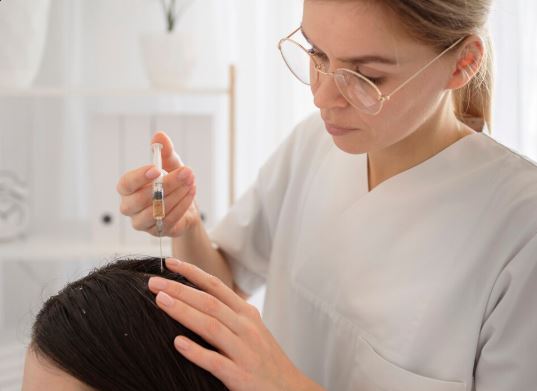
The proposed approach involves introducing an exosome-based preparation into the targeted scalp area through a procedure selected by the treating professional. Researchers are investigating whether the biological signals carried by these vesicles may help support the environment around hair follicles.
Nevertheless, the procedure, preparation, and composition of exosome products can vary considerably. There is currently no universally accepted protocol for exosome-based hair restoration, and patients should understand that results are not guaranteed.
Potential Benefits of Exosome-Based Hair Treatments
Interest in exosome-based treatments continues to grow because of their potential applications in regenerative dermatology. Some of the proposed benefits include the following.
1. Supporting Scalp Health
A healthy scalp provides an important foundation for normal hair growth. Researchers are exploring whether exosome-based preparations may influence cellular responses involved in maintaining scalp tissue.
2. Potential Support for Hair Follicle Activity
Hair follicles move through different growth stages. Laboratory and early clinical research is examining whether exosome-associated signalling may influence pathways involved in follicle activity. More robust human studies are needed to establish whether these effects translate into meaningful hair growth.
3. A Developing Option in Hair Restoration
Traditional hair loss treatments include medications, selected procedural therapies, and hair transplantation when appropriate. Exosome-based treatments represent a developing area of research rather than a proven replacement for established options.
4. An Individualised Treatment Approach
Hair loss can have several underlying causes. A dermatological assessment can help identify the likely cause and determine whether established therapies or further investigations are necessary before considering newer treatments.
Who May Consider Exosome-Based Hair Restoration?
People experiencing hair thinning or early hair loss may be interested in learning about emerging regenerative treatments. However, suitability depends on the cause, severity, and duration of hair loss, as well as the condition of the scalp and remaining hair follicles.
A dermatologist may evaluate factors such as family history, scalp inflammation, hormonal influences, nutritional status, and possible medical conditions. Blood tests or other investigations may be recommended when clinically appropriate.
At Follicare Dermatology, patients can discuss their hair concerns and receive guidance about available treatment options. A consultation should include an explanation of the evidence, potential risks, costs, and alternatives before any procedure is considered.
Exosome Therapy Compared With Established Hair Loss Treatments
Different hair restoration options work in different ways, so the most appropriate choice depends on the diagnosis.
Medications: Treatments such as topical minoxidil can help some people manage specific types of hair loss. Other prescription medicines may be suitable for certain patients following medical evaluation.
Platelet-rich plasma (PRP): PRP uses a preparation derived from the patient’s own blood. It has been studied for certain types of hair loss, although treatment protocols and outcomes vary.
Hair transplantation: This surgical procedure moves hair follicles from one area of the scalp to another. It may be appropriate for selected individuals with suitable donor hair.
Exosome-based approaches: These are being investigated for their possible role in hair restoration. Unlike established options, their effectiveness, long-term safety, and optimal treatment protocols remain uncertain.
Patients should not assume that newer treatments are necessarily more effective than conventional therapies. A qualified professional can explain the evidence supporting each option.
Safety Considerations Before Treatment
Safety is an essential consideration when exploring any procedure involving biological products. Exosome preparations may differ in their source, manufacturing methods, purity, composition, and quality controls. Products marketed for hair restoration should not automatically be considered safe or effective.
Potential concerns include irritation, inflammation, infection associated with procedures, allergic or immune reactions, and unknown long-term effects. Product quality and regulatory status also require careful consideration.
Before proceeding, patients should ask about the product’s origin, manufacturing standards, available clinical evidence, potential complications, and applicable regulatory authorisation. They should also confirm whether the treatment is being offered by a qualified healthcare professional in an appropriate clinical setting.
It is important to remember that regulatory approval for one use does not necessarily establish approval for hair restoration. Patients should avoid providers who promise guaranteed results or claim that exosome therapy permanently cures every type of hair loss.
What Results Can Patients Expect?
Results from hair restoration treatments depend on the underlying condition, individual biology, treatment choice, and consistency of care. Hair grows slowly, so meaningful changes generally require time to evaluate.
For exosome-based hair treatments, there is not yet enough reliable evidence to predict how much hair regrowth a particular patient can expect or how long any improvement may last. Before-and-after photographs and personal testimonials cannot replace well-designed clinical trials.
Follicare Dermatology encourages individuals researching hair restoration to seek evidence-based guidance, understand realistic expectations, and consider established treatments when appropriate. Regular follow-up with a qualified professional can help monitor progress and adjust the treatment plan if necessary.
Conclusion
Exosomes for Hair Growth represent an emerging area of research in regenerative dermatology. Their potential role in cellular communication and hair follicle biology has attracted interest, but further high-quality clinical studies are necessary to confirm their effectiveness, safety, and long-term benefits.
Anyone experiencing persistent hair thinning should begin with a professional assessment to identify the underlying cause. Comparing established treatments with emerging options can help patients make informed decisions based on scientific evidence rather than marketing promises.
Follicare Dermatology provides a starting point for individuals who want to understand their hair and scalp concerns and explore suitable hair restoration options. A personalised consultation can help clarify which treatments may be appropriate and what outcomes are realistically achievable.