
Industrial valve systems need reliable equipment for safe and accurate operation. Large valves often require high torque and controlled movement. A suitable gearbox makes this operation easier and more dependable.
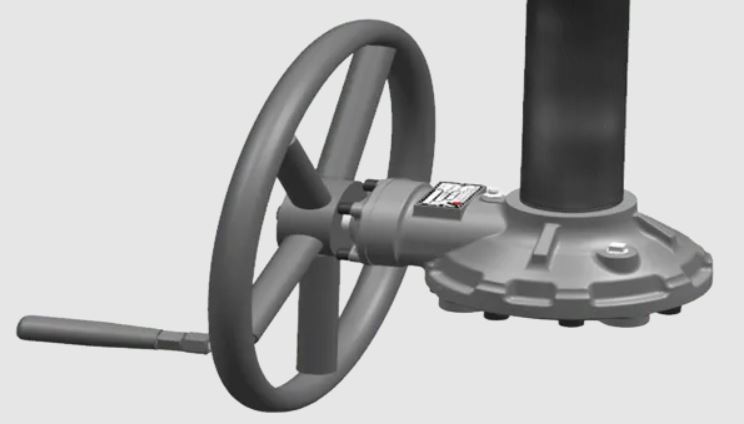
A Non Rising Valve Gearbox is designed for valve applications where the valve stem does not move vertically during operation. Instead, the stem rotates within the valve body while the gearbox transfers the required torque.
This design can provide valuable space-saving benefits. Therefore, it works well in plants where vertical clearance is limited. Industries can use these gearboxes in water treatment, power generation, pipelines, chemical plants, and other process applications.
Choosing the right gearbox can also improve operating efficiency. At the same time, proper sizing helps reduce mechanical stress and maintenance problems.
What Is a Non Rising Valve Gearbox?
A Non Rising Valve Gearbox is a mechanical device used to operate valves with non-rising stems. It transfers input power from a handwheel, actuator, or other drive source to the valve stem.
During operation, the valve stem rotates but does not move upward or downward. This makes the design different from a rising stem valve arrangement.
The gearbox uses gears to increase torque and control the speed of valve movement. Consequently, operators can open or close large valves with less manual effort.
The design is especially useful when the valve requires multiple turns for complete operation. Moreover, it can provide controlled movement for heavy-duty industrial valves.
How Does a Non Rising Valve Gearbox Work?
The working principle is straightforward. An input mechanism provides rotational movement to the gearbox. Internal gears then transfer this movement to the output shaft connected to the valve.
The gear ratio determines how the input speed converts into output torque and movement. A higher reduction ratio can provide greater torque while reducing output speed.
This controlled transmission is important for large industrial valves. Operators need enough torque to overcome friction, pressure, and other resistance during operation.
Because the valve stem remains within the same vertical position, the system can also reduce the space needed above the valve.
Why Stem Movement Matters
Valve stem movement affects equipment layout. A rising stem needs additional vertical clearance because the stem moves upward during valve operation.
A non-rising arrangement avoids this requirement. Therefore, engineers can install valves in areas with restricted headroom.
This feature can become particularly useful in underground pipelines, compact plants, and enclosed industrial areas.
Key Benefits of a Non Rising Valve Gearbox
A Non Rising Valve Gearbox offers several practical advantages for industrial valve systems. However, the exact benefits depend on valve design and operating conditions.
Compact Installation
The biggest advantage is often its compact vertical arrangement. Since the valve stem does not rise, the system needs less overhead space.
As a result, engineers can install the valve in locations where a rising stem design may not be practical.
High Torque Output
Large valves can require considerable torque during operation. A gearbox helps multiply the available input torque.
Therefore, an operator or actuator can control the valve without applying excessive force.
Smooth Valve Operation
Controlled gear movement helps prevent sudden valve movement. This can support smoother opening and closing cycles.
Furthermore, gradual operation may reduce unnecessary mechanical stress on the valve and connected pipeline.
Reduced Space Requirements
Industrial facilities often have complex layouts. Every component must fit within the available space.
A Non Rising Valve Gearbox can support installations where vertical space remains restricted. This makes it a useful choice for compact valve stations.
Suitable for Heavy-Duty Applications
Many industrial processes use large valves that operate under demanding conditions. A correctly selected gearbox can handle the required torque and operating cycles.
Still, engineers should always select the gearbox according to actual load and service requirements.
Common Applications of Non Rising Valve Gearboxes
A Non Rising Valve Gearbox can be used across different industrial sectors. Its suitability depends on the valve type, torque requirement, operating environment, and actuator arrangement.
Common applications include:
- Water treatment plants
- Wastewater treatment facilities
- Industrial pipelines
- Power generation plants
- Chemical processing units
- Oil and gas systems
- Mining operations
- Manufacturing facilities
- Irrigation systems
Water treatment plants, for example, use large valves to manage water flow. Limited space can make compact valve operating equipment especially useful.
Similarly, pipeline systems may require reliable valve control at locations where vertical clearance is restricted.
How to Select the Right Non Rising Valve Gearbox
Selecting the correct gearbox requires more than checking valve size. Engineers should evaluate the complete operating requirement before making a decision.
First, determine the valve’s operating torque. Then, identify the number of turns required for full opening or closing.
Next, check the required input method. The gearbox may operate manually through a handwheel or connect with a suitable actuator.
Important selection factors include:
- Valve type
- Operating torque
- Number of turns
- Gear ratio
- Input speed
- Output speed
- Mounting arrangement
- Stem dimensions
- Operating temperature
- Environmental conditions
- Required protection level
A proper safety margin should also be considered. The gearbox should comfortably handle normal operating loads.
Jayveer Enterprise can assist buyers in understanding gearbox requirements based on their application. However, technical specifications should always be verified before purchase.
Maintenance Tips for Better Gearbox Performance
Regular maintenance helps keep valve operating equipment reliable. Even a robust Non Rising Valve Gearbox needs proper inspection and care.
Start with routine visual inspections. Check the housing, mounting points, and connected components for visible damage or leakage.
Lubrication is another important consideration. Use the lubricant recommended for the specific gearbox design and operating conditions.
Operators should also monitor unusual sounds or vibration. These signs may indicate gear wear, misalignment, poor lubrication, or excessive loading.
A practical maintenance program should include:
- Regular visual inspections
- Lubrication checks
- Gear condition monitoring
- Fastener inspections
- Shaft alignment checks
- Leakage monitoring
- Periodic operational testing
Early identification of mechanical problems can prevent costly downtime.
Non Rising Valve Gearbox vs Rising Stem Arrangement
The main difference relates to stem movement. A rising stem moves vertically as the valve operates. In contrast, a non-rising stem rotates without significant vertical movement.
Therefore, a Non Rising Valve Gearbox can be more suitable where overhead clearance is limited.
However, the correct option depends on the valve design and application. Engineers should consider operating conditions rather than choosing a gearbox based only on available space.
Why Proper Gearbox Sizing Is Important
Incorrect gearbox sizing can create operational problems. An undersized gearbox may struggle with the required torque and experience excessive wear.
On the other hand, an unnecessarily oversized unit can increase equipment cost and installation requirements.
Therefore, engineers should calculate the actual operating torque and consider factors such as friction, pressure, duty cycle, and safety margin.
Proper sizing also supports consistent valve performance. In the long term, this can contribute to lower maintenance requirements and better system reliability.
Frequently Asked Questions
1. What is a Non Rising Valve Gearbox?
It is a gearbox designed to operate valves with non-rising stems. The stem rotates during operation without moving vertically.
2. Where are Non Rising Valve Gearboxes commonly used?
They are commonly used in water treatment, pipelines, power plants, chemical facilities, irrigation systems, and other industrial applications.
3. What is the main benefit of a non-rising stem design?
The main benefit is reduced vertical clearance. This makes the arrangement useful in areas with limited overhead space.
4. Can a Non Rising Valve Gearbox work with an actuator?
Yes. Depending on the design, it can be connected with a suitable actuator. Compatibility should be checked based on torque, mounting, and operating requirements.
5. How can gearbox life be extended?
Regular inspection, correct lubrication, proper alignment, suitable loading, and preventive maintenance can help improve gearbox service life.
Conclusion
A Non Rising Valve Gearbox provides a practical solution for operating valves that require controlled torque and multi-turn movement. Its compact design makes it especially useful where vertical installation space is limited.
Furthermore, proper gearbox selection can improve valve control and reduce unnecessary mechanical stress. Regular maintenance can then help maintain reliable performance over time.
Jayveer Enterprise offers industrial gearbox solutions for different valve operating requirements. Businesses should evaluate torque, valve type, operating conditions, and installation limitations before selecting equipment.
If you need a reliable Non Rising Valve Gearbox for your industrial application, consult an experienced supplier and discuss your technical requirements before making the final selection.